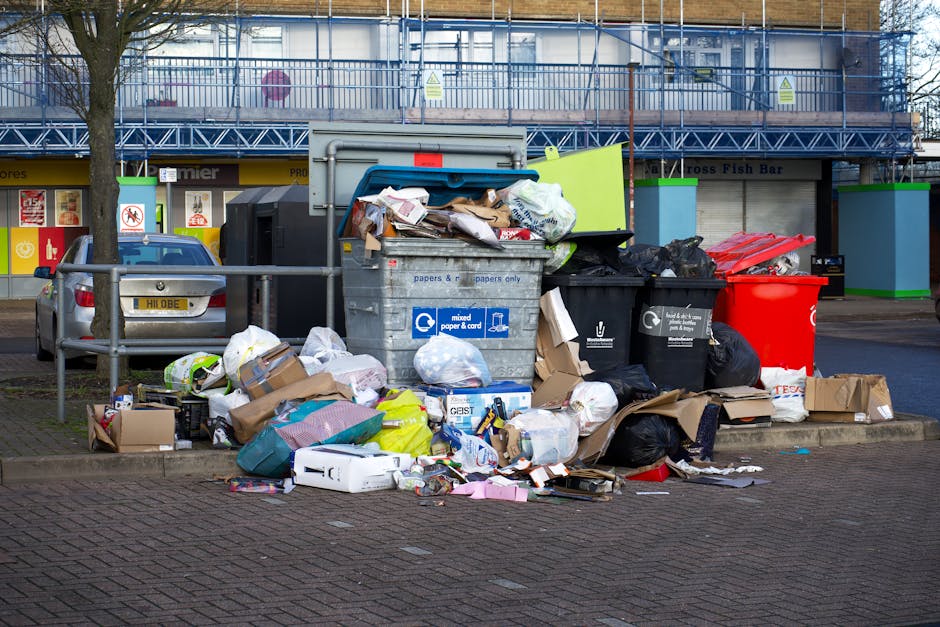
Redbridge waste rules explained for Ilford removals and disposals

If you are planning a move, clearance, or disposal in Ilford, the rules around waste can feel oddly complicated for something so ordinary. One minute you are boxing up a flat, the next you are wondering whether that broken wardrobe, old mattress, or bag of mixed rubble can go in the van at all. This guide on Redbridge waste rules explained for Ilford removals and disposals breaks the process down in plain English, so you can sort what stays, what goes, and what needs extra care before moving day arrives.
It matters more than most people think. Get the disposal side wrong and you can end up with delays, extra costs, or a last-minute panic outside the property. Get it right, and the whole move feels calmer, cleaner, and far more efficient. Let's get into it.
Why Redbridge waste rules explained for Ilford removals and disposals Matters
Waste rules are not just a back-office detail. They shape how a move is planned, what can be loaded, where items should go, and how quickly a property can be handed over. In Ilford, where people move between flats, terraced homes, shared houses, and offices all the time, waste handling often becomes the hidden bottleneck.
Think about a typical move-out day. There may be furniture to keep, furniture to remove, cardboard to flatten, a few broken bits from years of living, and at least one item that nobody quite remembers owning. If those items are sorted early, removal is straightforward. If they are not, the job becomes messy and often more expensive. Truth be told, most problems do not come from huge loads. They come from mixed loads.
Redbridge waste rules are especially relevant when you are trying to avoid fly-tipping risks, blocked collections, or the wrong item being left on the kerb. A trusted team handling removals and disposals should be able to separate reusable goods from general waste and explain what needs special handling. If you are comparing removal services or looking at man and van support, the waste side is worth asking about early, not after the van is already packed.
For landlords, letting agents, small businesses, and anyone moving on a deadline, waste awareness is also about reputation. A clean handover matters. So does staying organised. Nobody enjoys discovering, at 6:30 on a Friday evening, that the old filing cabinet still has to go somewhere. Been there, seen that. It is never the fun bit.
How Redbridge waste rules explained for Ilford removals and disposals Works
The basic idea is simple: different waste streams need different treatment. In practice, that means you need to know whether an item is reusable, recyclable, bulky waste, electrical waste, or something that may need a specialist route. Removal teams often help by separating and transporting items in a way that makes sorting easier, but the responsibility for what happens next still matters.
When people talk about removals and disposals in Ilford, they usually mean one of five things:
- moving goods you want to keep to a new address
- taking bulky unwanted items away from the property
- clearing waste after a home or office move
- collecting furniture for reuse, recycling, or disposal
- managing mixed contents from a flat, house, or commercial unit
If you are moving out of a flat, for example, the load can include furniture, boxes, old appliances, and loose rubbish. A service such as flat removals can be useful where access is tight and items need careful carrying, but waste still has to be separated properly. Likewise, if you are clearing a larger property, house removals may cover the transport side, while the disposal plan covers the unwanted items that should not simply be dumped with the keep pile.
The practical workflow usually looks like this:
- Walk through the property and identify what stays, what goes, and what might be donated or recycled.
- Separate hazardous or restricted items from ordinary household waste.
- Box, label, or stack items so the crew can load efficiently.
- Use the right removal method for the right item type.
- Send reusable or recyclable items into the appropriate route, rather than mixing everything together.
That last step sounds obvious, but it is the one people skip when they are tired and the kettle is already packed. And then the problems start.
For some households, a simple furniture pick up is enough for a bulky sofa or old wardrobe. For others, especially where there is a full home or business clear-out, it helps to use a broader moving option such as removals or a more tailored home moves service that can balance transport and disposal planning together.
Key Benefits and Practical Advantages
Following the right waste approach does more than keep you on the right side of local expectations. It makes the move smoother, cleaner, and less stressful. That is the honest version.
- Fewer delays: If waste is sorted before loading day, the crew can move faster and more safely.
- Lower risk of rejected items: Mixed waste and restricted items are a common cause of confusion.
- Better value: Recycling and reuse can reduce the amount that needs full disposal.
- Cleaner handovers: This matters for rentals, sales, office exits, and end-of-tenancy deadlines.
- Safer handling: Old appliances, broken glass, sharp metal, and heavy items are easier to manage when planned.
- Less stress: You know what is happening to each item instead of guessing on the day.
There is also a credibility angle. If you are using a professional team, you want to know they take waste and recycling seriously. A company that can explain its approach to recycling and sustainability is usually more organised in the details too. That does not make them perfect, of course, but it is a good sign.
Expert summary: The safest and most efficient removals plan in Ilford is usually the one that separates keep-items, reusable items, recyclable waste, and anything that needs specialist handling before the van turns up.
Who This Is For and When It Makes Sense
This guidance is for anyone in Ilford who needs to move items out of a property without creating avoidable waste problems. That includes homeowners, tenants, landlords, estate agents, small businesses, students, and anyone downsizing. Honestly, it also helps people who are just a bit overwhelmed by clutter and want a clear starting point.
You will probably find this especially useful if you are:
- leaving a rented flat and need to clear out unwanted furniture
- moving between family homes and need to dispose of duplicates
- relocating an office and replacing old desks or chairs
- helping a relative downsize and sorting items room by room
- getting a property ready for sale, letting, or refurbishment
- dealing with bulky furniture that will not fit in normal rubbish collections
Students in particular tend to underestimate waste planning. A few boxes, a broken chair, some old bedding, maybe a microwave that has seen better days. It adds up quickly. In those cases, a lighter service like student removals may be practical, especially when the aim is to move the keep items efficiently and deal with the rest separately.
Commercial users have a different challenge. Office waste often includes mixed material: paper, packaging, broken monitors, chairs, cables, and confidential items. A service such as office removals or broader commercial moves support can help keep the move structured so waste does not blur into transport, and vice versa.
Step-by-Step Guidance
If you want to manage the process properly, keep it simple and systematic. The cleaner the plan, the fewer surprises on collection day.
- Walk the property first. Start in each room and decide what is staying. Do not jump straight into packing. That is how unwanted items sneak into the keep pile.
- Separate by category. Put reusable furniture, general waste, cardboard, soft furnishings, and electrical items into different groups.
- Identify anything unusual. Paint, chemicals, sharp materials, gas-related items, or large electricals may need special consideration.
- Measure bulky pieces. If something is too large for stairs, lift access, or tight hallways, plan the removal route before move day.
- Decide what should be reused or recycled. If a sofa, table, or chest of drawers still has life left in it, avoid treating it as ordinary rubbish.
- Book the right help. Choose a service that matches the volume and access conditions. A compact job might suit a removal van, while a larger clearance may need a moving truck.
- Label everything clearly. A simple note like "keep," "dispose," or "recycle" saves time later.
- Keep proof of what was removed. For landlords, agents, and businesses, this is a sensible habit even when the job is straightforward.
One small but useful habit: put a final "decision box" in each room. If you are unsure about an item, it goes there until you decide. This prevents half-dead decisions being made under pressure at the front door. That front-door moment always feels smaller than it is, and yet it causes half the mess.
If packing is part of the job too, using packing and boxes or packing and unpacking services can keep the keep-items better separated from the disposal items. Simple, but effective.
Expert Tips for Better Results
These are the sort of practical details that save time in the real world.
- Do a second pass the day before. You will almost always find one more thing to dispose of. Usually in the corner. Usually awkward.
- Keep mixed waste to a minimum. The more mixed it is, the more time it takes to sort.
- Strip furniture where possible. Remove drawers, cushions, loose shelves, and detachable legs before loading.
- Plan access before you lift. Narrow stairs, parking restrictions, and lift bookings can matter as much as the waste itself.
- Separate fragile and sharp items early. Broken glass and splintered wood should not be buried in a pile of soft items.
- Ask how the provider handles disposal. Good removal teams are usually transparent about where furniture and general waste are headed.
In our experience, the best results come from treating disposal like a mini project rather than an afterthought. A couple of minutes sorting on each floor can save an hour later. Maybe more.
If you have a bulky item that is still usable, a dedicated furniture removals or furniture pick up approach may be more sensible than straight disposal. It is often the difference between "we dealt with it" and "we had a waste issue on the day."
Common Mistakes to Avoid
The same handful of mistakes crop up again and again. Luckily, they are easy to avoid once you know them.
- Leaving disposal decisions too late. By then, the crew is waiting and the pressure is on.
- Mixing valuables with waste. A surprising number of documents, chargers, remotes, and keys get binned by accident.
- Assuming everything can be taken together. Not all items are treated the same way.
- Forgetting about access issues. A bulky item can become a real problem on a narrow stairwell.
- Ignoring special items. Some items need extra care, even if they look harmless.
- Not checking the provider's scope. A removals job and a clearance job are similar, but not identical.
Another common issue is overestimating what will fit in one go. People often look at a pile and think, "That's not much." Then the van door opens, and suddenly it is a different story. Happens all the time.
If the move is time-sensitive, a backup plan can help. For example, keeping a few items in storage while you sort the final disposal list can prevent rushed choices. Sometimes pausing the decision is the smartest move, not the most glamorous one.
Tools, Resources and Recommendations
You do not need fancy equipment to manage waste well, but a few basic tools make a noticeable difference.
- Permanent marker and labels: Ideal for marking keep, dispose, recycle, and donate piles.
- Heavy-duty sacks and boxes: Better than loose piles, especially in shared buildings.
- Gloves: Useful for broken materials, dusty loft items, and old storage clearances.
- Tape measure: Handy for bulky furniture and awkward hallways.
- Phone photos: A simple way to document what was cleared, especially for landlords or businesses.
From a planning perspective, it helps to look at your removal method alongside your property type. A small one-bedroom flat with lift access will feel very different from a top-floor Victorian house. If access is tight, a compact vehicle may be enough. If you are moving a bigger load, a removal truck hire option may make more sense. The key is matching the vehicle and the waste volume to the job, not the other way round.
It is also worth checking practical business information such as pricing and quotes, insurance and safety, and terms and conditions before booking. Those pages help set expectations, which is where a lot of stress disappears. Quietly, and quite nicely.
Law, Compliance, Standards, or Best Practice
Waste handling in the UK is governed by general legal and environmental duties, and the safest approach is to follow accepted best practice rather than guess. For removal and disposal work in Redbridge and Ilford, that means using lawful routes, avoiding fly-tipping, and making sure hazardous or restricted items are not treated like ordinary household rubbish.
Without getting too technical, there are a few sensible principles to keep in mind:
- Do not leave waste where it should not be left. Kerbside dumping without proper arrangement can create problems quickly.
- Keep records where appropriate. This is especially helpful for landlords, offices, and repeated clearances.
- Separate special items. Electricals, sharp objects, and potentially hazardous waste should be handled carefully.
- Use reputable providers. If a provider cannot explain how they deal with items, that is a red flag.
Best practice is not about being rigid for the sake of it. It is about avoiding the messy middle ground where nobody is sure who is responsible for what. And that middle ground is exactly where mistakes happen.
If you run a business, keep an eye on your duty of care over waste and the practical side of handover. If you are a homeowner or tenant, focus on separating items and using a provider that is clear about what will be moved, recycled, reused, or disposed of.
Options, Methods, or Comparison Table
Different jobs call for different approaches. The table below gives a simple comparison, based on what people in Ilford often need in real life.
| Option | Best for | Strengths | Watch-outs |
|---|---|---|---|
| Self-sorting and council-style disposal preparation | Small amounts of waste and a low-pressure timetable | Cheap, simple, good for tidy households | Time-consuming; can be awkward for bulky items |
| Man and van support | Mixed items, smaller clearances, flexible timing | Flexible, practical, often efficient for local jobs | Needs clear instructions so waste does not get mixed up |
| Full removals service | House moves, larger flats, more furniture, multi-room jobs | Better for complex access, heavier loads, and organised transport | May be overkill for very small disposal-only jobs |
| Furniture collection or pick-up | Single bulky items or a few reusable pieces | Good for sofas, wardrobes, tables, and similar items | Not ideal if you also have general waste or many loose items |
| Storage plus staged disposal | Moves with unclear timing or delayed handovers | Reduces pressure and prevents rushed decisions | Extra planning and short-term cost |
If you are torn between methods, ask one simple question: do I need a transport solution, a clearance solution, or both? That question clears up a surprising amount.
Case Study or Real-World Example
A common Ilford scenario goes like this. A couple is moving out of a first-floor flat into a larger home nearby. They have a sofa they are keeping, a dining table they are not, two broken bedside units, several black sacks of old clothes and papers, and a fridge that no longer works. Not glamorous, but very normal.
At first glance, they think a single van trip will do. Then they walk the stairwell. Tight corner. Awkward landing. One bulky item that barely turns. The plan changes, because it has to. They separate the items into three groups: keep, reusable, and disposal. The dining table is sent for furniture handling, the broken units go for disposal, and the paper-heavy sacks are kept apart from the rest of the load.
Because the waste is sorted before the vehicle arrives, the move runs more smoothly. The crew does not waste time deciding what to take. The route through the building is planned. The couple can focus on the keys, the meter readings, and that odd little feeling of leaving a place you have lived in for years. You know the one.
What made the difference was not a big budget or a complicated system. It was simply knowing which items were part of the move and which items were part of the disposal.
Practical Checklist
Use this before moving day if you want the disposal side to stay under control.
- Have I separated keep items from dispose items?
- Have I checked for anything fragile, sharp, or unusually heavy?
- Have I set aside reusable furniture or appliances?
- Have I labelled boxes and bags clearly?
- Have I measured anything bulky that needs special handling?
- Do I know whether I need removals, disposal support, or both?
- Have I checked access at the property, including stairs, parking, and lift availability?
- Have I confirmed the provider's scope and pricing in advance?
- Have I considered storage if the timing is not yet final?
- Have I kept important documents and valuables away from waste piles?
Quick takeaway: If you can answer those ten points confidently, you are already ahead of most last-minute movers.
For people who want a cleaner, more streamlined move, the combination of removals, careful packing, and a sensible waste plan usually works best. No drama. Just less chaos on the floorboards.
Conclusion
Redbridge waste rules explained for Ilford removals and disposals come down to one simple idea: sort early, separate properly, and use the right route for each item. Once you do that, the move becomes easier to manage, the property is cleaner to hand over, and the whole day feels less frantic. That's really the point.
Whether you are moving a flat, clearing a house, or organising a business relocation, the smartest approach is to treat waste as part of the plan rather than a leftover problem. If you get that bit right, everything else settles more neatly into place. And, to be fair, that is one less headache on an already busy day.
Get a free quote today and see how much you can save.
When the boxes are stacked and the last unwanted item is finally gone, the room feels lighter in a way that is hard to describe. That feeling is worth planning for.
Frequently Asked Questions
What are the main waste rules I should think about during an Ilford move?
The main thing is to separate what you are keeping from what is being disposed of, then treat bulky, reusable, recyclable, and special items differently. That keeps the move organised and reduces the chance of problems on the day.
Can a removals team take unwanted furniture as well as my belongings?
Often, yes, but it depends on the service you book and the item types involved. Some jobs are mainly transport-based, while others also include collection or disposal support. It is best to confirm that before moving day.
Is it better to recycle furniture or throw it away?
If a piece of furniture is still usable, reuse or recycling is usually the more sensible route. If it is broken beyond repair, disposal may be necessary. A good provider should help you decide which route fits the item.
What should I do with old electrical items during a clearance?
Keep electricals separate from ordinary rubbish. Items such as microwaves, monitors, and small appliances are best grouped together so they can be handled appropriately.
Do I need to sort waste before the removal van arrives?
Yes, ideally. The more sorted everything is before the team arrives, the faster and safer the job usually goes. It also reduces the chance of taking items you meant to leave behind.
What happens if I leave mixed rubbish with furniture on the day?
It can slow the job down and may create extra handling or extra cost. Mixed loads are awkward, simple as that. Clear labelling and separate piles make the whole process smoother.
How do I know whether I need removals or just disposal help?
If you are moving belongings to a new address, removals is the main need. If you are mainly clearing out unwanted items, disposal or furniture collection may be the better fit. Some moves need both.
Are there special concerns for office waste in Redbridge?
Yes. Office clearances often include confidential papers, electronic equipment, packaging, and furniture. Those items should be separated carefully so the move stays organised and compliant with normal best practice.
Can I use storage if I am not ready to dispose of everything yet?
Absolutely. Storage can be useful if you need time to decide what stays, what goes, and what can be moved later. It is a practical option when dates do not line up neatly.
What is the biggest mistake people make with removals and disposals?
Leaving the disposal decision until the last minute. That is usually when items get mixed, access becomes harder, and the job feels more stressful than it should. A bit of early sorting solves a lot.
How can I make a flat clearance in Ilford easier?
Use clear labels, remove obvious rubbish first, measure large items, and check access routes early. If the flat has stairs or tight turns, plan the route before the van turns up. That tiny bit of prep makes a real difference.
Should I ask about insurance and safety when booking removals?
Yes. It is sensible to check how the provider handles safety, loading, and transport. Clear information on insurance and safety helps you book with more confidence and fewer unknowns.